



News
Hamburg Mayoral Delegation Visits ShangGong Group to Discuss a New Chapter in Sino-German Manufacturing Cooperation
On October 16, on the occasion of the 40th anniversary of the sister-city relationship between Shanghai and Hamburg, a 24-member delegation from Hamburg, Germany, covering the fields of politics, economy and science, led by State Secretary Dr. Christopher Schwieger, visited ShangGong Group for exchanges. Dr. Zhang Min, Chairman and President of ShangGong Group, warmly received the delegation, and the two sides held in-depth dialogue on such topics as corporate development, overseas M&A integration, Sino-German collaboration mechanisms and intelligent manufacturing transformation.
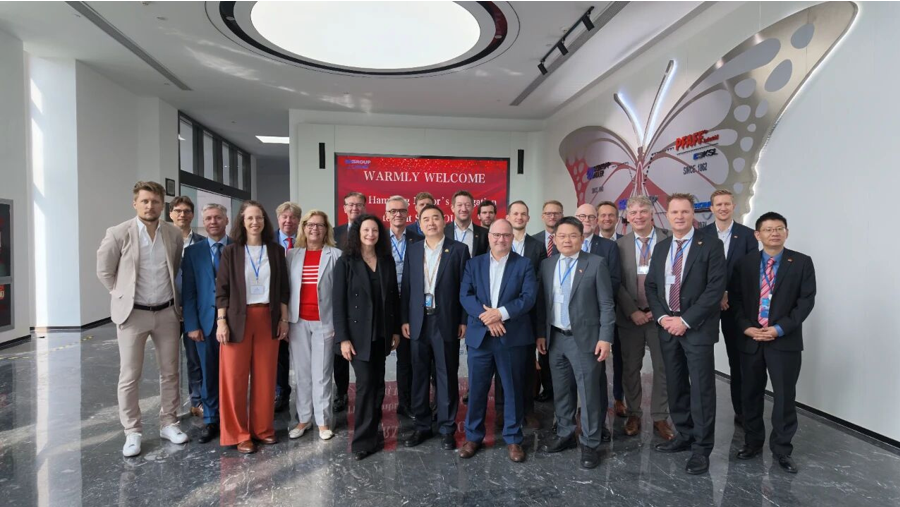
During the exchange, Dr. Zhang Min shared ShangGong Group's development journey from a traditional sewing equipment manufacturer to a global intelligent equipment enterprise. Since launching its internationalization strategy in the 2000s, the company has successively completed the acquisition of several century-old German enterprises, including durkoppadler, PFAFF Industrial and KSL, gradually building a global R&D and manufacturing network spanning Europe, Asia and North America. He specifically noted that 22 years ago, the company established ShangGong (Europe) GmbH in Hamburg; later, for better management, ShangGong Europe was relocated from Hamburg to Bielefeld, and in 2018 it merged with durkopp adler GmbH. This series of moves laid a solid foundation for subsequent in-depth integration. Drawing on its overseas M&A practice, ShangGong Group has kept the German core team intact, respected local technological heritage, and established cross-cultural management mechanisms, achieving sustained profitability and reverse technology feedback from the acquired enterprises.
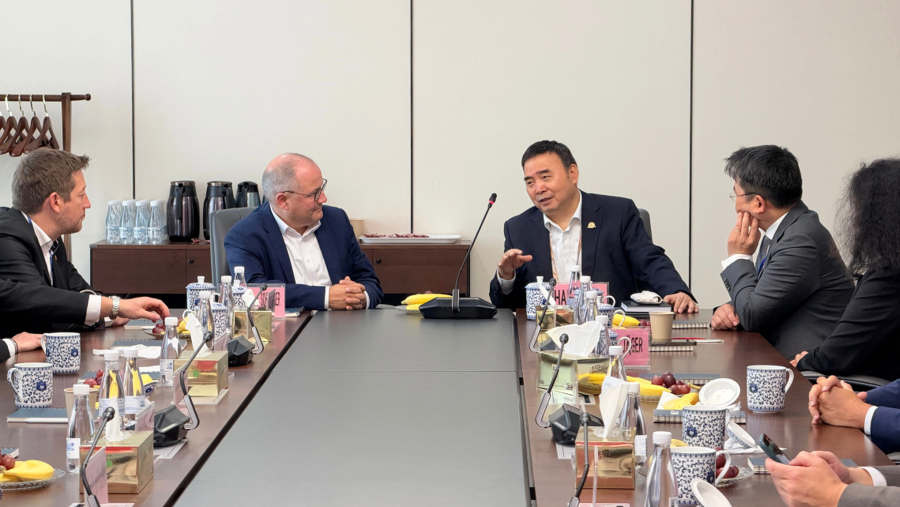
In terms of Sino-German coordination, ShangGong Group has developed a collaboration model of "German R&D + Chinese intelligent manufacturing + global markets": the German team focuses on frontier technology development and the heritage of precision craftsmanship, while the Chinese team takes charge of engineering implementation, cost optimization and rapid response. The two sides achieve seamless connection through regular technical exchanges, joint project teams and digital management platforms. In the field of intelligent manufacturing, ShangGong Group has deeply integrated the German Industry 4.0 concept with Chinese manufacturing scenarios, developing flexible automated sewing units and digital twin systems for the automotive interiors, aerospace and new energy sectors — enhancing added value of its products and providing a replicable solution for the intelligent upgrading of traditional manufacturing.
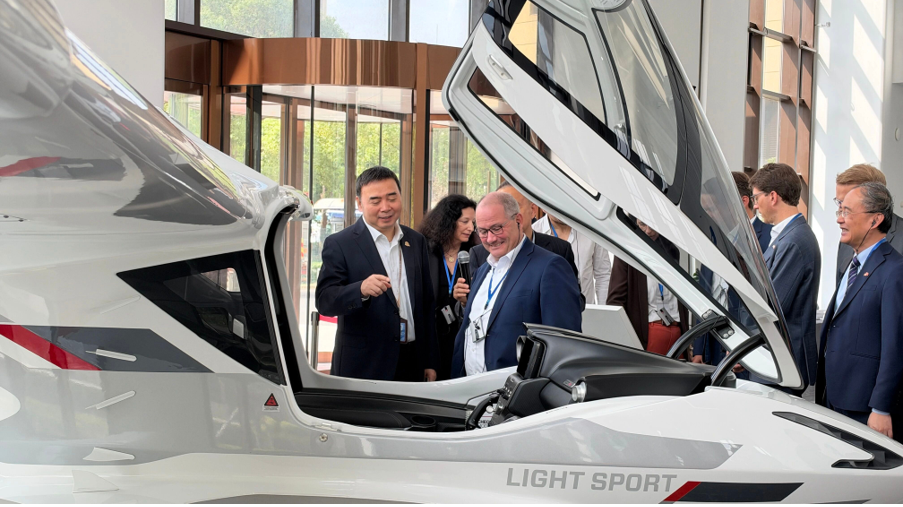
The German delegation expressed keen interest in ShangGong Group's practice of integrating engineering and manufacturing resources across multiple countries. Dr. Christopher Schwieger noted that ShangGong Group's more than two decades of deep presence in Germany is a model case of industrial cooperation between Germany and China, offering a reference path for traditional German manufacturing enterprises to address the challenges of globalization. Representatives from the political, business and academic circles in the delegation also spoke one after another, arguing that against the backdrop of the restructuring of global supply chains and accelerating technological change, Sino-German manufacturing needs to deepen collaboration with an open posture, and that ShangGong Group's multinational operating experience precisely testifies to the practical feasibility of "complementarity and mutual benefit."
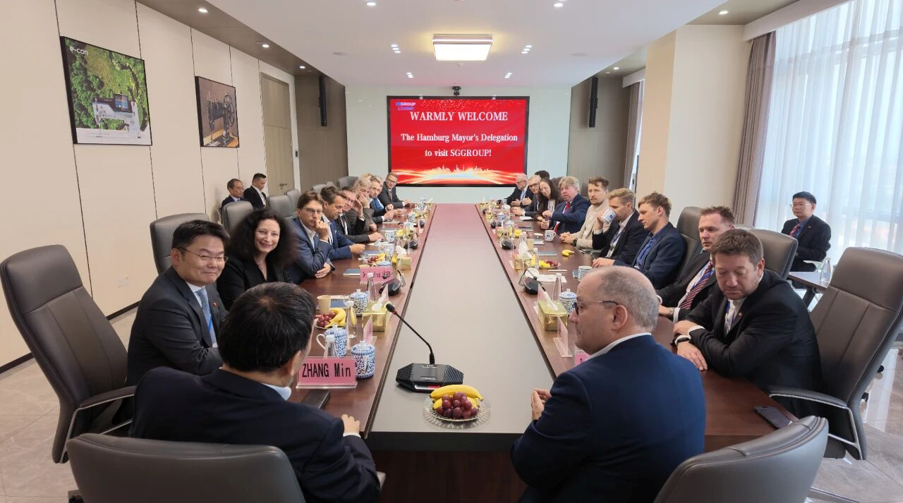
This visit allowed both sides to understand each other's challenges and opportunities through concrete business experience. For Sino-German manufacturing, long-term cooperation relies not only on technological complementarity, but even more on deep mutual understanding and trust between people. As the signal sent by this visit shows: only by extending exchanges into day-to-day operations and teamwork, and making trust the underlying foundation of cooperation, can the advantages of both sides be continuously transformed into an inexhaustible driving force for common development. At this historical juncture marking the 40th anniversary of the sister-city ties between Shanghai and Hamburg, such practical interaction is the most vivid illustration of the future of Sino-German manufacturing cooperation.
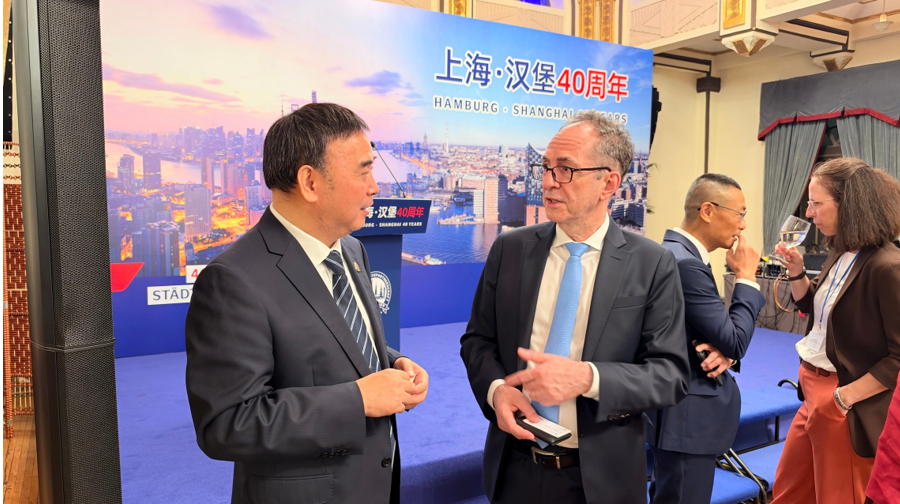
That evening, Dr. Zhang Min and others attended the commemoration event marking the 40th anniversary of the Shanghai–Hamburg sister-city relationship. First Mayor of Hamburg Peter Tschentscher, Vice Mayor of Shanghai Lu Shan, and Consul General of Germany in Shanghai Dr. Norbert Riedel attended and delivered speeches, witnessing together with guests from all walks of life the profound friendship between the two cities spanning four decades — adding a warm and memorable footnote to the delegation's visit to Shanghai.
- Previous: ShangGong Group Congratula…
- Next: A Delegation from the Jiang…

Related News


 TOP